
eRacks Systems Tech Blog
Open Source Experts Since 1999
An AI Just Proved Fermat’s Last Theorem. Here Is What That Means for the Server You Buy Next
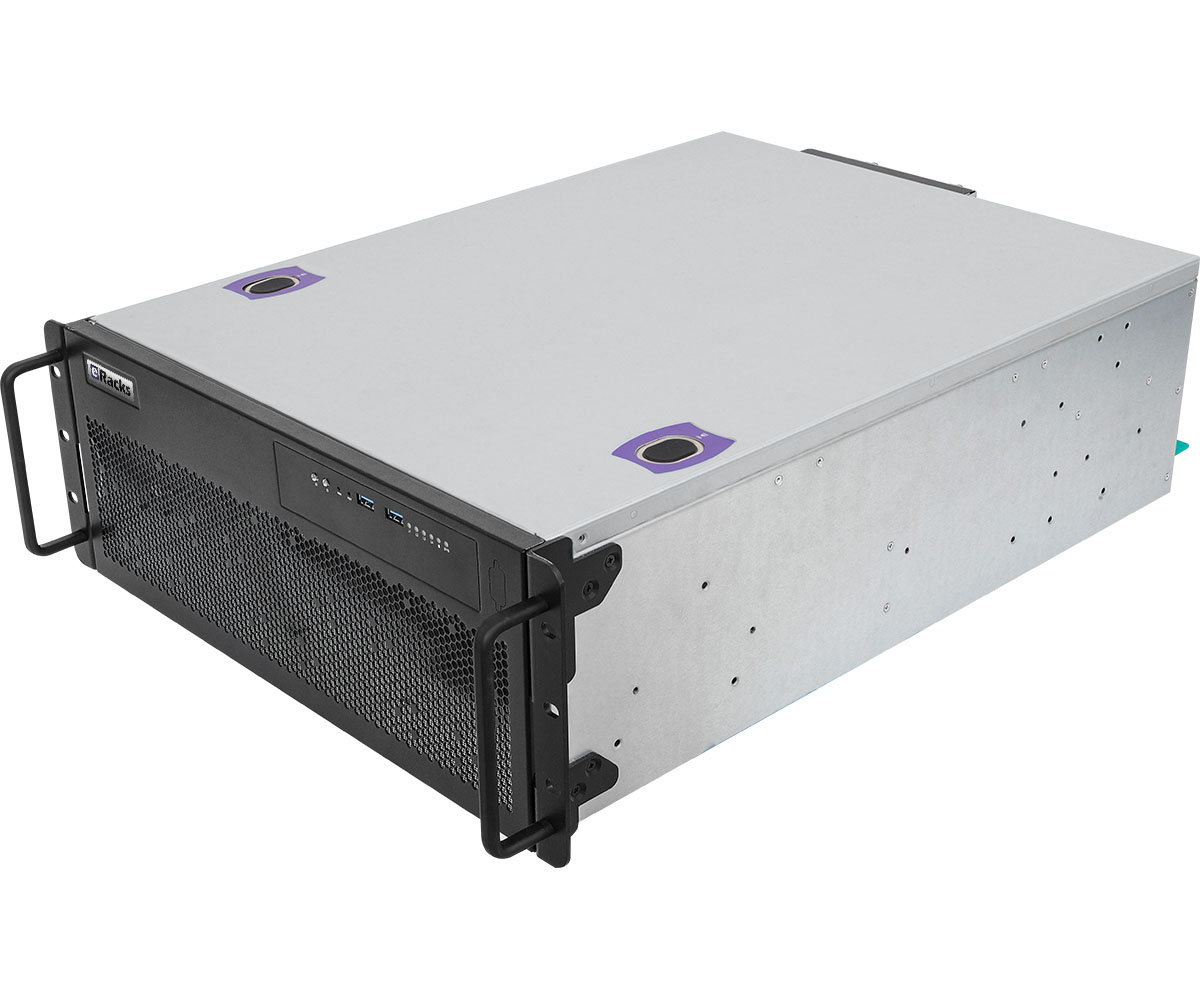
On September 4, Anthropic published the first complete, computer-checked proof of Fermat’s Last Theorem. Claude wrote it in Lean, a programming language built so a computer can verify every step of a mathematical argument instead of a human reviewer. Eleven days, largely on its own, 13 million lines, about 29,500 intermediate theorems along the way, and nothing assumed beyond Lean’s three standard axioms. Andrew Wiles’s 1995 proof ran 129 pages and took months of expert review to check.
I read that as a hardware story.
Eleven days of work, not a chat reply
The interesting part is not that a model knew number theory. It is that a machine did eleven days of sustained, structured work, and another machine checked every line of it. That is the shape of job we spec servers for now: long-running agents that read, write, test and retry against your own documents and code, not a question-and-answer box.
The frontier models live in their makers’ datacenters. What you can own is the open-weight class right behind them (Qwen, Llama, DeepSeek, Gemma), running on hardware you control, on your own documents, with no per-token bill and nothing leaving the building.
What that class of model does on a server you can buy
On our bench, a dual Intel Arc Pro B70 server runs Qwen3-14B at 54 tokens per second and Qwen3.6-27B at 26 (a token is about three quarters of a word), with the models resident in 64GB of GPU memory. The measurements, the software stack and the three power-management fixes it took to get there are in our benchmark write-up.
The money
Run the arithmetic our public rent-versus-own calculator uses (24 hours a day, 15 cents per kWh, $1,200 a year of overhead, a three-year payback) and an eRacks/AINSLEY at $21,395 pencils out against an AI bill of about $800 a month. A team of ten on $100 seats is $1,000 a month, forever. The calculator takes your own numbers, and every field is editable.
Every eRacks server is built to order, burned in, and benchmarked before it ships, with the numbers in the box. If you are sizing a machine for this kind of work, the AINSLEY configurator is the place to start, and a quote request gets a reply within one business day.
Joseph Wolff, Founder and CTO, eRacks Open Source Systems
joe September 9th, 2026
Posted In: AI Servers, News
Tags: AI server cost, eRacks/AINSLEY, Fermat's Last Theorem, formal verification, Intel Arc Pro B70, Lean, on-premise LLM, private AI, Qwen3
We Benchmarked a Dual Intel Arc Pro B70 AI Server: Real Numbers, Real Gotchas
This week we ran a dual Intel Arc Pro B70 server through our full AI provisioning pass: burn-in, GPU bring-up, model deployment, and benchmarks. Not a spec-sheet estimate, not a vendor slide: a production machine on our bench, running the models our customers actually ask for. Here are the numbers, and the three undocumented problems we had to solve to get them.
The numbers
Serving stack: llama.cpp’s official Intel build (SYCL, Intel’s open GPU compute layer), running rootless under Podman (containers with no root daemon), exposing the standard OpenAI-compatible API on localhost. Models in GGUF format, 4-bit quantization, 16K context window.
- Qwen3-14B: 54 tokens per second. A token is roughly three-quarters of a word, so this is around 40 words per second: the fast daily driver for chat, summarization, and coding assistance.
- Qwen3.6-27B: 26 tokens per second on a single B70. The larger flagship, held steady across back-to-back 300-token responses. For reference, that is faster than most people read.
Both models run entirely in GPU memory. One card serves the model; the second card is free to carry a second model, an embedding model for document search, or headroom for more users. No API fees, no per-token metering, no data leaving the building.
Why the Arc Pro B70 matters
The B70 gives you 32GB of VRAM (the GPU’s onboard memory, the hard limit on what models fit) per card. Two cards put 64GB of GPU memory in a server at a price that undercuts a single big-name datacenter GPU by a wide margin. In 2026’s GPU market, with datacenter cards on allocation and prices climbing, that ratio of memory to dollars is the story. If your workload is private AI inference (running models on your own hardware, on your own data), the B70 class is the value play right now.
And the density curve is still bending: board partners are already building single-slot 32GB B70 variants (Sparkle’s 160W blower design, shown at Computex). Eight single-slot cards put 256GB of GPU memory in one chassis, enough to serve 200B-parameter-class models, and exactly the direction our 8-GPU platforms are built around.
The gotchas nobody documents
Getting those numbers took more than racking cards. Three real problems, none of them in any manual:
- Arc cards go to sleep and do not come back. Linux power management idles a headless Arc card (one with no monitor attached) at three separate levels: runtime power management, PCIe port power, and the display engine. On a multi-card system the second card can lock up until the next full power-off. The fix is a three-layer configuration: a udev rule pinning the cards awake at driver bind, a boot-time service covering the PCIe ports, and two kernel boot parameters. A warm reboot will not recover a card that has gone down this hole; only a cold power-off will.
- Rootless container port-forwarding that resets every connection. On current Ubuntu, the rootless port forwarder reset every request to the AI server while the server itself was perfectly healthy: a failure that looks exactly like an application crash and can eat hours or days of debugging. We now bind these stacks to host networking by design.
- Container image format quirks that silently drop build instructions, and upstream configuration files with inline comments that become literal arguments and crash the server on startup.
We solved all three on the bench, wrote them into our provisioning playbook, and bake the fixes into every AI build we ship. That is bench time you do not spend, and downtime your team never sees.
What this costs to own
Every machine below is configured online, priced live, and ships benchmarked:
- eRacks/AIDAN: one Arc Pro B70, 32GB VRAM, 2U EPYC platform, from $13,895.
- eRacks/AINSLEY: two Arc Pro B70s, 64GB VRAM, Threadripper platform, from $21,395. This is the configuration class benchmarked above.
- eRacks/HIGHLANDER: the 8-GPU flagship for serious multi-user inference and fine-tuning, from $154,995.
- The full AI server line starts at $7,695.
And the work described in this post is a product: eRacks AI Provisioning & Setup. We install the serving stack, deploy and benchmark your chosen models on your actual hardware, apply every fix above, and hand you the numbers and the rebuild notes: $1,495, or $2,495 with a private RAG stack (retrieval-augmented generation: a chat interface plus a vector database that lets the models answer from your own documents, entirely offline). Included at no charge on flagship orders.
Renting this class of GPU in the cloud runs thousands of dollars a month, forever, with your data on someone else’s disks. Run your own numbers in our TCO calculator: for daily AI workloads, ownership typically pays for itself inside a year.
Configure a machine online, or request a quote and tell us what models you want to run: we will spec the memory, the cards, and the stack to match. Questions first? Call us at 408-455-0010.
joe August 26th, 2026
Posted In: AI Servers, News
Tags: AI server benchmarks, GPU server, Intel Arc Pro B70, llama.cpp, local LLM, open source AI, Podman, private AI, Qwen3, rootless containers