
eRacks Systems Tech Blog
Open Source Experts Since 1999
Refurbished, Renewed, and Burned In: What We Do to a Used GPU Before It Ships
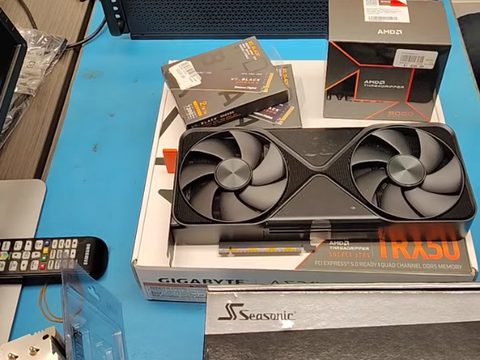
This week a customer’s IT team asked us for “more details on your refurb process”. One of them had already asked an AI assistant, which summarized our process from our own website: a 72-hour burn-in, fans checked, thermal pads refreshed. It got most of it right. Here is the full answer, from us.
Why refurbished at all
Our new systems ship with new parts, bought through authorized US distribution and validated-new sources, and that stays the default. Some customers ask for something else on purpose. The AMD Threadripper 3000 series is a good platform that distributors no longer carry. The GeForce RTX 3090 is the last GeForce card with NVLink (NVIDIA’s bridge that links two cards’ memory), which matters for some training work, and a pair of them costs a fraction of a current professional card. For builds like these the parts can only come refurbished or renewed, and we are glad to build them.
The words cover a lot of ground, though. “Refurbished” can mean a part that was properly reworked, or a used part that was wiped down and relisted. Our components page describes the other end of that market: “clean pull” lots with a short broker warranty, and server CPUs locked to their first owner’s firmware. We don’t buy from that market. Our refurbished cards come from refurbishers who back them with a warranty, and then every refurbished part goes through our own process.
What we do to a refurbished part
- Inspection. Every part is checked when it arrives, and anything that doesn’t meet our standards goes back. Not every “refurbished” or “renewed” part passes; we have rejected and returned some.
- Rework on the cards. We check the fans and replace them as needed, and we always replace the thermal compound or pads (the material that carries heat from the chip to the cooler). Worn connectors, plugs or jacks get replaced, and visibly marginal solder joints get resoldered. Then the card is cleaned and reassembled.
- Assembly. Everything is double- and triple-checked, neat, clean and properly cabled, and every card has to be recognized by its driver before we go further.
- Operating system and test suite. The OS and drivers go on, with our own utilities and our testing and burn-in suite.
- Burn-in. 72 hours of testing under full load, CPU, memory and every GPU together, including overnight runs and several multi-hour burn-ins, with temperatures logged and the driver logs watched for errors. If a part fails, we replace it and restart the burn-in from zero.
- The AI stack. On an AI server the stack goes on last, and the system is benchmarked with real models and tested before it ships.
The 72 hours are the same burn-in every eRacks system gets. The 24-hour minimum on our components page is typically for rush orders.
What it means for you
When a quote includes a refurbished or renewed part, it says so, line by line. Refurbished GPUs carry a 1-year warranty. And the system they go into gets the same assembly, the same checks and the same 72-hour burn-in as a system built entirely from new parts.
Looking at a previous-generation build, a pair of NVLinked cards, or an AI server on a budget? Browse our AI rackmount servers, or write to us at info@eracks.com and tell us what you need.
joe October 29th, 2026
Posted In: News, Technology
Tags: AI server, burn-in, eRacks, refurbished GPU, renewed hardware, RTX 3090, Threadripper