
eRacks Systems Tech Blog
Open Source Experts Since 1999
The Price You See Is the Price: Transparent Server Pricing in a Shortage
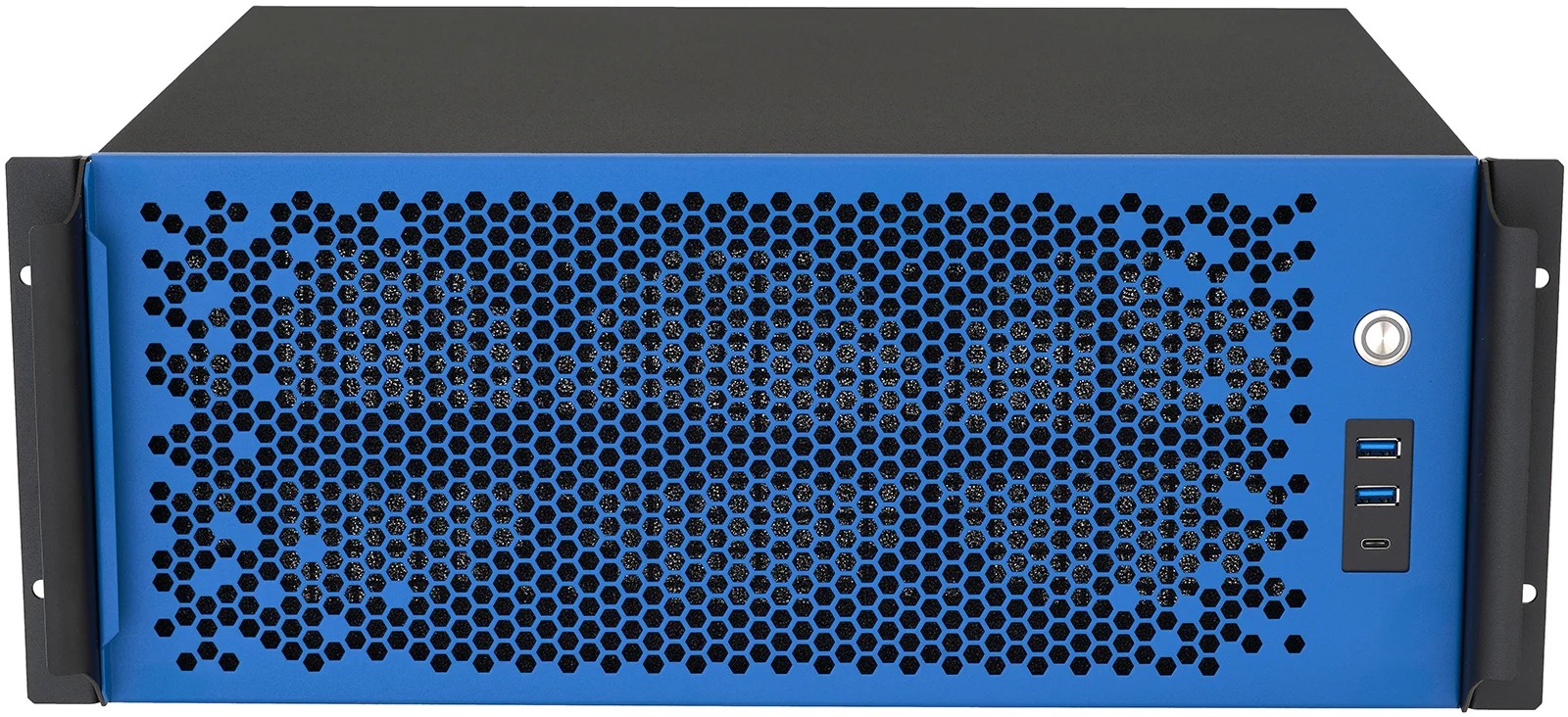
This month, one of our distributors repriced a GPU by 29 percent. Overnight. The same card, quoted to us on a Thursday, cost $280 more on Friday. Server-grade DDR5 ECC memory (error-correcting code memory, the kind servers use to detect and fix bit errors) is running $24 to $28 per gigabyte on the street, roughly triple what it cost before the 2026 memory shortage. Enterprise hard drives jumped too.
In a market like this, most server vendors reach for the same three tricks. We think you should know what they are, because we built our whole pricing system to do the opposite.
The three tricks
The teaser config. The advertised price quietly assumes last year’s components: less memory than the workload needs, a boot drive standing in for storage, a processor two generations back. The real configuration costs thousands more, which you discover after you are invested.
“Call for pricing.” If the vendor will not put a number on the page, the number depends on who is asking. That is not pricing, that is negotiation, and it always favors the side with more information. That is never the buyer.
The silent quote. A price quoted in a volatile market is a bet. Some vendors let you carry a stale quote right up to the purchase order, then “revise” it when backing out is hardest.
What we do instead
The configurator price is the price. Every configuration on eracks.com produces a real, orderable number, computed from what the components actually cost us. No “starting at” games: change the memory, the drives, the GPUs, and watch the price move in both directions, up and down, with the parts market.
Robots watch the market so the catalog stays true. Automated trackers re-check memory, drive, and GPU street prices daily and weekly, and feed re-pricing that a human reviews before it ships. When a component spikes, we re-price openly rather than let the old number quietly stop being true.
When a build goes underwater, we fix the build in the open. This week our own margin checks flagged two NAS models whose entry configurations no longer made sense at current drive prices. We did not pad the price and we did not gut the spec quietly. We changed the default drive count, published the same price, and left every larger configuration exactly where it was. The entry price stayed real.
Quotes tell you everything up front. As of this month, every formal eRacks quote carries five things: your discounts by name, a validity window, a component-volatility note, an estimated lead time (in this market, chassis allocation is a real thing, and you deserve to know it before you order), and a configuration that matches a product we actually ship today. That last one sounds obvious. It is not industry practice.
When we cannot source a part at a price we can stand behind, we say so. Some configurations show “get a quote” instead of a number. That is not coyness. It means the market for that part is moving too fast for a printed price to stay true, so we price it fresh, with a validity window, when you ask.
Why bother
Earlier this year a prospect told us one of our configurations looked misleading. We did not enjoy hearing it, and he had a point: a stale page had drifted out of sync with the parts market. That critique turned into the system described above: automated price tracking, margin floors, re-verified defaults, and the five-line quote rule. The fix for being wrong is not better wording. It is better plumbing.
We have been building open-source servers since 1999. No venture capital, no lock-in, no per-seat fees, and nothing in the business model that needs a pricing trick to work. In a shortage, transparent pricing is slower and occasionally embarrassing. It is also the only kind worth publishing.
Configure anything, from a ZFS NAS to a private AI server, and the number you see is the number. If your workload does not fit a page, ask us and you will get a quote with all five lines on it.
joe July 20th, 2026
Posted In: News
Tags: AI server, DRAM shortage, NAS, no lock-in, Open Source, quotes, server pricing, supply chain, transparent pricing
The April 2026 AI GPU Landscape: From $349 to $16,500, Which VRAM Fits Your Model?
Last updated April 2026. Prices move weekly — keep checking back.
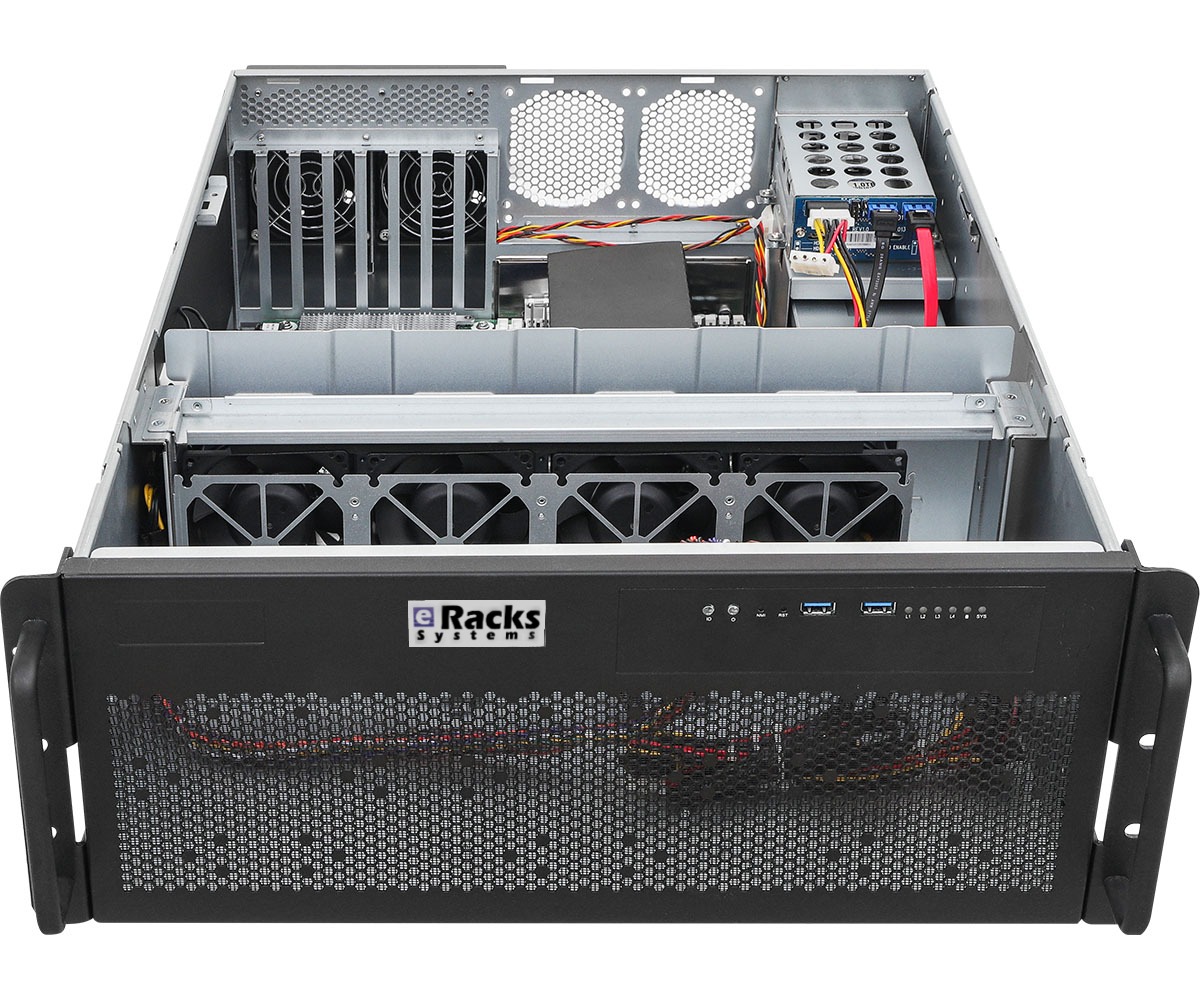
If you’ve been watching the AI GPU market, you already know the usual tension: NVIDIA dominates mindshare and most of the benchmarks, AMD is cheaper per gigabyte of VRAM but software support lags, and Intel keeps quietly shipping cards that punch well above their price tag but nobody talks about them. Meanwhile the actual hardware question most customers ask us is just: “How much VRAM do I need, and what’s the cheapest card that gets me there?”
This post is our answer as of mid-April 2026. We’ve broken the market into seven VRAM tiers, from the $349 low-profile starter card to a $16,500 datacenter accelerator, and matched each tier to the model sizes it actually runs well. All prices are current street prices, not MSRPs. At the end we’ll tie each tier back to one of our AI servers.
What “VRAM fits my model” actually means
As a rule of thumb for local inference:
- Model weight size ≈ parameters × bytes per weight. A 7B-parameter model at 4-bit quantization needs roughly 3.5–4 GB. The same model in full FP16 precision needs ~14 GB.
- Add 2–4 GB of working memory on top for KV cache, context window, and runtime overhead — more if you want long contexts.
- If your model plus overhead doesn’t fit, you’ll spill to system RAM or disk, and your tokens-per-second drops by an order of magnitude.
So the VRAM tier you need is driven by what you want to run, not by marketing tier names. Here’s how the 2026 market actually lines up.
The seven tiers
| Tier | VRAM | Price range | Models it runs comfortably | Example cards |
|---|---|---|---|---|
| Low-Profile (2U) | 8–16 GB | $320–$450 | 3B–8B quantized, embeddings, small classifiers | RTX 5060 LP, Intel Arc Pro B50, nVidia RTX A1000/A2000 LP |
| Entry | 16 GB | $480–$1,500 | 7B–13B full, 30B quantized | RTX 4060 Ti, RTX 5070 Ti, RTX 5080, AMD RX 9060 XT 16GB, AMD RX 9070 |
| Workstation | 20 GB single-slot | $1,280–$2,500 | 13B full, 34B quantized; quiet, ECC, space-efficient | nVidia RTX A4000 Ada (single-slot), AMD Radeon Pro W7800 32GB |
| Prosumer | 24–32 GB | $2,000–$3,740 | 34B full, 70B quantized | RTX 3090 Ti refurb, AMD RX 7900 XTX, RTX 5090 (availability-dependent) |
| Server | 48 GB | $1,299–$8,800 | 70B full, early 100B class | Intel Arc Pro B60 Dual 48GB, RTX 6000 Ada, NVIDIA L40S (passive), AMD Radeon Pro W7900 |
| Flagship | 96 GB | ~$9,680 | 70B full comfortably, 120B quantized, long-context everything | RTX PRO 6000 Blackwell 96GB ECC |
| Datacenter | 192 GB HBM3 | $15k+ (by quote) | Serious training + 405B-class inference | AMD Instinct MI300X |
The two surprise cards of 2026
If you only remember two things from this post, remember these:
Intel Arc Pro B50 ($399). A 16 GB low-profile card for under $400 didn’t exist twelve months ago. This card ships with both a standard and a low-profile bracket in a dual-slot form factor, slides into a 2U chassis without drama, and gets you enough VRAM for 7B-class models, embedding pipelines, and small classification workloads. As a starter card for a team dipping into local AI, nothing NVIDIA sells competes on $/GB at this form factor.
Intel Arc Pro B60 Dual 48GB ($1,299). This one is genuinely wild. Intel’s Project Battlematrix puts two Arc Pro B60 GPUs on a single PCIe card with 48 GB total VRAM — at roughly a fifth the price of an NVIDIA RTX 6000 Ada ($7,150) or a quarter the price of an L40S ($8,800). The software stack isn’t as mature as CUDA and your specific workload may or may not run well on Intel’s Battlematrix Linux drivers, but if your model runs, you’re getting 48 GB of VRAM for $1,299. For inference-bound 70B-quantized workloads where you don’t need peak training throughput, this is the best $/VRAM-GB in the market right now by a wide margin.
The AMD side
AMD’s RDNA 4 generation (RX 9060 XT, RX 9070, RX 9070 XT) turns out to be genuinely competitive for consumer-grade AI inference once you’re running on a framework that’s ROCm-aware — llama.cpp, Ollama, and vLLM all work. Performance-per-dollar on 16GB RDNA 4 cards is very close to the NVIDIA 50-series and sometimes ahead. For customers who don’t need CUDA and want to avoid NVIDIA’s pricing, this is a real path.
On the workstation side, AMD’s Radeon Pro W7800 (32 GB) and W7900 (48 GB) are direct replacements for NVIDIA’s RTX A5000/A6000 at roughly half the price, with ECC memory and workstation driver support. If you’re building a quiet single-user AI workstation, the W-series deserves a serious look.
At the top end, the AMD Instinct MI300X with 192 GB of HBM3 is the only single card that holds an entire 405B-class model in VRAM without any quantization tricks. It’s quote-only, it’s expensive, and the software story is still improving — but for the handful of customers for whom “does it fit” is more important than any other consideration, it’s currently the only game in town below $30k.
Which eRacks AI server for which tier?
We built our AI rackmount server line around this same VRAM-first thinking. Each model defaults to a different VRAM tier out of the box, and you can upgrade within the tier or jump tiers at configuration time:
- eRacks/AILSA — 2U, from $5,995. Default tier: Low-Profile. The “affordable starter” for teams trying local AI for the first time. Upgrade chassis to 3U-GPU or 4U-GPU if you want to move up to full-height cards later.
- eRacks/AIDAN — 2U full-height (up to 3 GPUs mounted sideways), from $9,995. Default tier: Entry 16GB. For 7B–13B models full-precision.
- eRacks/AINSLEY — 4U, from $14,995. Default tier: Prosumer 24–32GB. For 34B full or 70B quantized, with room for up to 4 full-height GPUs.
- eRacks/AISHA — 4U 8-GPU, from $19,995. Default tier: Workstation. Scales to the Server and Flagship tiers with up to 8 full-height GPUs — including the Intel Arc Pro B60 Dual for 48GB-per-card pricing unavailable anywhere else.
All four run Ubuntu Linux LTS Server out of the box, come with ECC-capable DDR5 RAM up to 512 GB, and ship with assembly, burn-in, and a 3-year warranty.
A note about prices
Our internal component costs tracked above — and therefore the baseline configuration prices you see on each product page — are mid-April 2026. The two forces moving them right now are (1) the AI-driven DDR5 memory supply crunch, which has roughly doubled ECC server RAM pricing since Q3 2025, and (2) the NAND flash shortage pushing SSD prices up. We’ll keep this post synced with our configurator. If you see a number here that doesn’t match what the configurator shows, trust the configurator — it’s the system of record.
Questions we haven’t answered yet
This post is the overview. Over the next few weeks we’ll be publishing deeper dives on:
- Why we just bumped our RAM prices 3x — an honest look at the 2026 memory market
- Arc Pro B60 Dual vs RTX 6000 Ada — real-world benchmarks on Llama 3 70B quantized
- The eRacks AI server lineup in depth — AILSA, AIDAN, AINSLEY, AISHA side-by-side
Got a specific model you want to run and aren’t sure which tier fits? Drop us a line and we’ll build the configuration for you.
joe April 15th, 2026
Posted In: AI, Deep Learning, LLM, Local AI, New products, Open Source, Rackmount Servers, servers, Technology
Tags: AI, AMD Radeon, Blackwell, Deep Learning, eRacks, GPU, Inference, Intel Arc, Llama, LLM, Local AI, Machine Learning, Open Source, Rackmount Servers, RDNA 4, VRAM
Introducing the eRacks AI Server Lineup: RAM-First Local AI for the Real World
You Want Local AI
Tired of cloud AI bills that keep climbing? Worried about sending sensitive data to third parties? Want to run the latest open-source LLMs like DeepSeek, Llama, Mixtral, or Qwen — on your own hardware?
We’ve been getting a lot of questions about AI servers lately, so we’re excited to officially announce our RAM-optimized AI Rackmount Server lineup — four models designed from the ground up for local-first AI computing.
The Big Idea: RAM > GPU Hype
Here’s something the big vendors don’t want you to know: for many AI workloads — especially LLM inference, RAG pipelines, and vector search — total system RAM matters more than having the flashiest GPU.
Why? Because large language models need to fit somewhere. If your model doesn’t fit in VRAM, it spills into system RAM. If it doesn’t fit there, you’re swapping to disk — and that’s game over for performance.
Our servers are built around this insight. We focus on massive RAM capacity combined with COTS (Commercial Off-The-Shelf) GPUs — the cards you can actually buy, at prices that won’t require board approval.
Meet the Family
So far, we’ve got four models, each named after Celtic / Gaelic names that happen to start with “AI” (we couldn’t resist):
Model Form Factor Max RAM GPUs Starting Price Sweet Spot
eRacks/AILSA 2U 512GB Up to 3 (LP) $4,995 SMBs, solo devs, 200-600B+ models
eRacks/AIDAN 2U 3TB Up to 3 $9,995 Small teams, 800B+ models, RAG
eRacks/AINSLEY 4U 2TB Up to 4 $14,995 R&D, training, fine-tuning
eRacks/AISHA 4U 6TB Up to 8 $19,995 Enterprise, hosting, all MoE models
eRacks/AILSA — The Entry Point
“Affordable Innovative Local Server for Artificial Intelligence” 😄
AILSA is our compact 2U starter — perfect for startups, researchers, and developers who want local AI without the sticker shock. With up to 512GB RAM and 3 low-profile GPUs (Intel Arc B50 or NVIDIA RTX 5060 LP), it punches well above its weight class for inference workloads.
Best for: Private chatbots, development sandboxes, entry-level RAG, running 600B+ parameter models locally.
eRacks/AIDAN — “The RAMstack”
AIDAN steps up to Dual AMD EPYC processors and up to 3TB of DDR5 ECC RAM. This is the machine for teams doing serious vector search, RAG pipelines, or serving LLMs to multiple users.
Best for: Small-to-medium teams, 800B+ models, retrieval-augmented generation, production inference.
eRacks/AINSLEY — The R&D Workhorse
Our 4U Threadripper-based system with up to 4 full-size GPUs and 2TB RAM. AINSLEY is built for the folks who need to train, fine-tune, and experiment — not just run inference.
Best for: Research labs, AI/ML startups, fine-tuning on private datasets, local experimentation.
eRacks/AISHA — The Beast
“Advanced Intelligent Server for High-RAM AI”
When you need to go all-in: up to 6TB RAM, up to 8 GPUs, and dual Intel Xeon or AMD EPYC processors. AISHA handles the largest MoE (Mixture of Experts) models, multi-tenant deployments, and enterprise-scale AI infrastructure.
Best for: Enterprise hosting, 800B+ models, multi-user deployments, running every MoE model out there.
Why Local? Why Now?
A few reasons we’re seeing massive demand for on-prem AI:
Privacy — Your data never leaves your building
Cost control — No per-token fees, no surprise bills
No rate limits — Run as many queries as your hardware can handle
Model freedom — Run any open-source model: Llama, DeepSeek, Mistral, Qwen, Gemma, and more
Customization — Fine-tune on your own data without uploading it anywhere
100% Open Source Ready
All our AI servers ship with Ubuntu and Ollama pre-installed, plus your choice of models (Llama, DeepSeek, Qwen, etc.). We also support custom preconfigurations:
• PyTorch, TensorFlow, JAX
• Hugging Face Transformers
• LangChain, vLLM, LM Studio
• OpenWebUI, LibreChat
• Milvus, Chroma (vector databases)
• Docker / Podman for containerized workflows
And of course — Rocky Linux, Fedora, Debian, or whatever distro you prefer. It’s your hardware.
COTS GPUs: No Vendor Lock-In
We spec readily available GPUs — NVIDIA RTX 30×0/40×0/50×0 series, professional A-series cards, Intel Arc, and AMD options. No waiting 6 months for an allocation. No $30k price tags for a single card. Swap, upgrade, or scale on your terms.
Ready to own your AI stack?
👉 Check out the full AI Server lineup – eracks.com/products/ai-rackmount-servers/
👉 Contact us for a custom quote
We’re happy to help you figure out the right balance of RAM, GPU, and storage for your specific workloads. That’s what we do.
Get Started: eRacks.com/contact
j
joe January 17th, 2026
Posted In: AI, Deep Learning, LLM, Local AI, Ollama, Open Source, Rackmount Servers, RAG, Technology
Tags: AI, Deep Learning, DeepSeek, EPYC, eRacks, eRacks Partner, GPU, Llama, LLM, Local AI, Machine Learning, Ollama, Open Source, Rackmount Servers, RAG, Threadripper
Latest OSes
Mint 22.2 “Zara”, 22.1 “Xia”, Debian 13.0, 13.1, Fedora 42, and more now available
admin October 23rd, 2025
Posted In: Debian, Fedora, Linux, Mint, NEW, News, Open Source, Operating Systems, Technology
Tags: Debian, fedora, Latest OS, linux, Mint, Open Source, ubuntu
More on Open-Washing
We are now an official supporter of the OSAID (Open Source AI Definition):
J

joe January 28th, 2025
Posted In: AI
Tags: AI, eRacks, Open Source, Open Washing, Rackmount Servers